Frances Earnshaw's consumption
Wuthering HeightsFrances Earnshaw's consumption is the fatal wasting disease that claims the life of Hindley Earnshaw's wife in the summer following the birth of their son Hareton. She is introduced as a young woman already marked for death: the doctor who attends her confinement declares that she has been in a consumption for many months and that she will be dead before winter. The diagnosis is delivered almost as an aside to the servant who brings the news to Ellen Dean, who is summoned home to nurse the newborn child with sugar and milk and to care for it day and night. The girl who carries the message reports that Frances herself talks as if she expects to live to see the child grow into a man, and that she is 'out of her head for joy' at the beauty of her son. The doctor's blunt words to Hindley are recorded with brutal clarity: 'Earnshaw, it's a blessing your wife has been spared to leave you this son. When she came, I felt convinced we shouldn't keep her long; and now, I must tell you, the winter will probably finish her.' He adds a reproach that stings all the more for its accuracy: 'you should have known better than to choose such a rush of a lass!'
The Course of the Illness
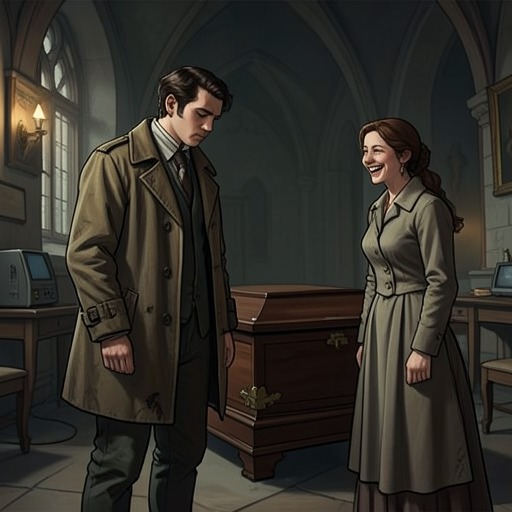
Frances's decline is marked by a stubborn and almost heroic refusal to acknowledge its reality. Until within a week of her death, her gay heart never fails her, and she maintains a flighty, merry spirits that her husband mistakes for recovery. Hindley persists doggedly, even furiously, in affirming that her health improves every day. When the doctor warns him that his medicines are useless at that stage of the malady and that he need not put him to further expense by attending her, Hindley retorts with a desperate denial: 'I know you need not—she's well—she does not want any more attendance from you! She never was in a consumption. It was a fever; and it is gone: her pulse is as slow as mine now, and her cheek as cool.' He tells his wife the same story, and she seems to believe him. The end comes suddenly and quietly: one night, while leaning on his shoulder and saying she thinks she shall be able to get up tomorrow, she is taken by a fit of coughing—a very slight one. He raises her in his arms, she puts her two hands about his neck, her face changes, and she is dead.
Consequences for Hindley and the Household
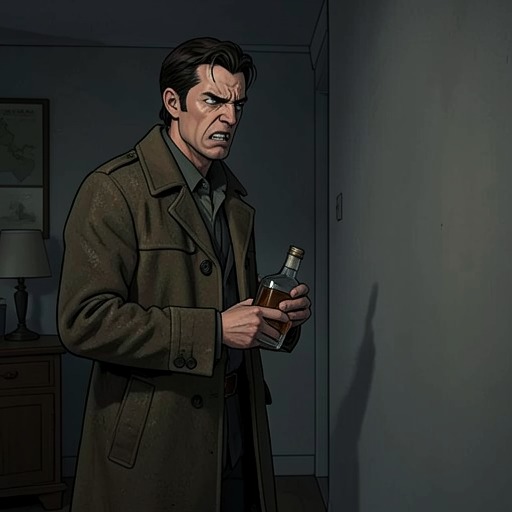
Frances's death transforms Hindley from a devoted husband into a figure of reckless dissipation. Ellen Dean observes that he had room in his heart for only two idols—his wife and himself—and that he doted on both and adored one. With Frances gone, his sorrow is of a kind that will not lament: he neither weeps nor prays, but curses and defies, execrating God and man, and gives himself up to reckless dissipation. The servants cannot bear his tyrannical and evil conduct for long; only Joseph and Ellen remain, Ellen because she had been his foster-sister and excuses his behaviour more readily than a stranger would, and Joseph because it is his vocation to be where there is plenty of wickedness to reprove. The child Hareton falls wholly into Ellen's hands, and Hindley, provided he sees the boy healthy and never hears him cry, is contented as far as he is concerned. The master's bad ways and bad companions form a pretty example for Catherine and Heathcliff, and his treatment of Heathcliff is enough to make a fiend of a saint. The household becomes an 'infernal house' where the curate drops calling and nobody decent comes near, with the sole exception of Edgar Linton's visits to Miss Cathy.
The Pattern of Wasting Illness in the Novel
Frances's consumption establishes a recurring pattern of wasting and fatal illness that runs through the novel. The same doctor who pronounces her doom later examines Catherine Earnshaw during her brain fever and speaks hopefully of a favourable termination, while privately signifying to Ellen that the threatening danger is not so much death as permanent alienation of intellect. The pattern recurs most explicitly in Linton Heathcliff, who is described as living almost as secluded as Catherine herself, constantly getting coughs, colds, aches, and pains of some sort, requiring a fire in the middle of summer, and treating a breath of night air as if it were killing. The housekeeper of Wuthering Heights reports that he is a tiresome inmate, wrapped in his furred cloak by the fire with toast and water on the hob to sip at, and that Heathcliff seems to dislike him ever longer and worse, having an antipathy to the sound of his voice. The same wasting motif returns at the very end of the novel in Heathcliff's own strange final illness, when he swallows nothing for four days and dies with his eyes fixed in a frightful, life-like gaze of exultation. Ellen Dean conceals the fact of his fasting, persuaded that he did not abstain on purpose but that it was the consequence of his strange illness, not the cause.
The Economic and Narrative Significance
Frances's death is also the hinge on which the economic tragedy of Wuthering Heights turns. With her gone, Hindley's dissipation leads him to mortgage every yard of land he owns for cash to supply his mania for gaming, and Heathcliff becomes the mortgagee. In that manner Hareton, who should now be the first gentleman in the neighbourhood, is reduced to a state of complete dependence on his father's inveterate enemy, living in his own house as a servant, deprived of the advantage of wages, quite unable to right himself because of his friendlessness and his ignorance that he has been wronged. The pattern of illness and death thus feeds directly into the novel's larger structure of property and revenge. Frances's consumption is the first link in a chain that leads to Heathcliff's usurpation of Wuthering Heights, his scheme to unite the two cousins so that Catherine Linton might be provided for as joint successor with Linton, and Edgar Linton's desperate alteration of his will to place Catherine's fortune in the hands of trustees so that it cannot fall to Heathcliff should Linton die. The illness that kills Frances is therefore not merely a personal tragedy but the originating wound from which the novel's long sequence of dispossession, captivity, and revenge unfolds.